⚔ RYOMEN SUKUNA ⚔ MALEVOLENT SHRINE AWAITS
SUKUNA MANGA
KING OF CURSES
Who Is Ryomen Sukuna? The Origin of a Legend
In the vast and terrifying universe of Jujutsu Kaisen, no name strikes more fear into the hearts of sorcerers and cursed spirits alike than Sukuna. Known across a thousand years of jujutsu history as the undisputed King of Curses, Ryomen Sukuna is a being whose very existence redefines the boundaries of power, malice, and supernatural horror. Born during the golden age of jujutsu sorcery in the Heian era, Sukuna was not originally a cursed spirit but a human sorcerer of such overwhelming strength that the combined efforts of the era's greatest warriors could not destroy him even after his physical death. Instead, his power was so concentrated, so impossibly dense, that it manifested in twenty indestructible fingers that became special-grade cursed objects, each one radiating enough cursed energy to warp reality around it.
The legend of Sukuna stretches far beyond the pages of fiction. The character draws heavy inspiration from a real figure in Japanese mythology — a two-faced, four-armed demon described in the ancient text Nihon Shoki. Creator Gege Akutami took this mythological foundation and transformed it into one of the most compelling antagonists in modern manga history. In the sukuna Manga storyline, the King of Curses exists in a state of fragmented dormancy for centuries until Yuji Itadori consumes one of his fingers, triggering a chain of events that reshapes the entire jujutsu world. From that single moment of ingestion, the narrative spirals into an epic saga of survival, sacrifice, and the eternal struggle between humanity's defenders and its most ancient predator.
What makes Sukuna truly terrifying is not merely his raw destructive power but his intelligence, his sadistic creativity, and his absolute refusal to acknowledge any being as his equal. He views all of existence — human, sorcerer, and cursed spirit — as insects beneath his feet. This philosophy of supreme arrogance, combined with the ability to back up every boast with apocalyptic force, is what elevates ryomen sukuna from a standard villain into a force of nature. Readers of the sukuna manga chapters quickly learn that when the King of Curses takes the stage, the rules of the world bend to his will, and no character is safe from his wrath.
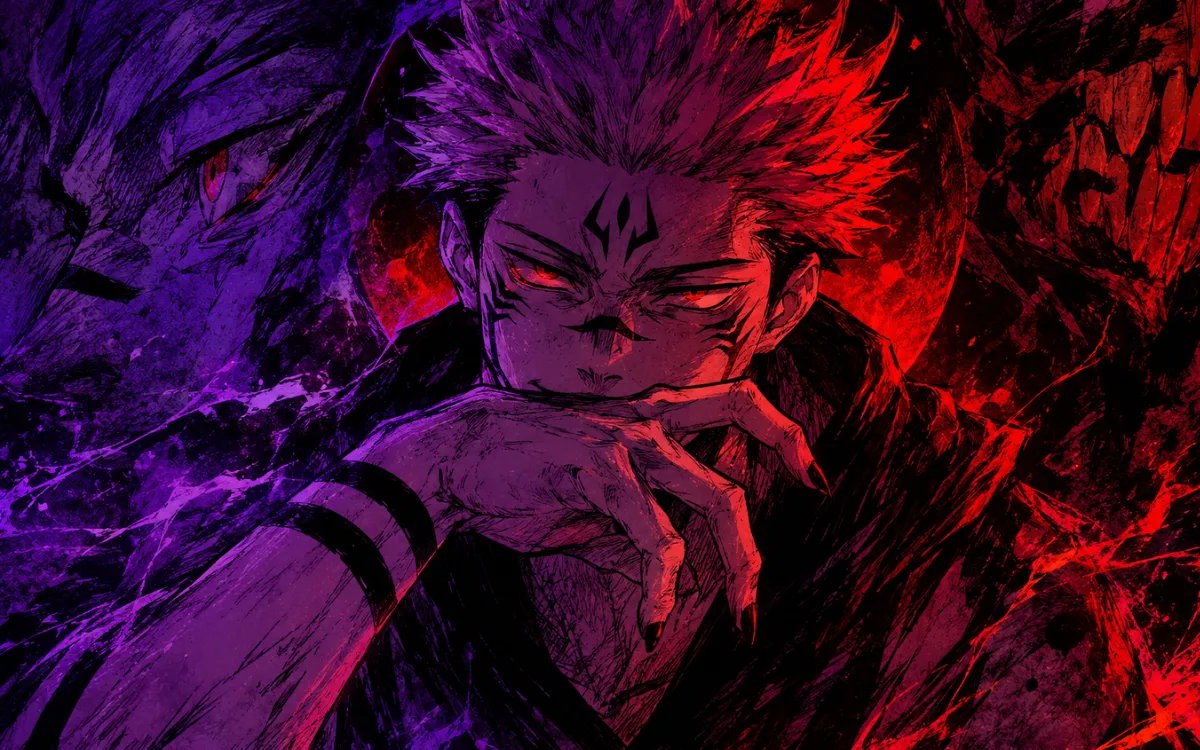
The Journey Through the Sukuna Manga Chapters
The sukuna Manga arc within Jujutsu Kaisen is a masterclass in long-form storytelling, weaving the King of Curses into nearly every major plot point from the very first chapter. When Gege Akutami introduced Yuji Itadori swallowing Sukuna's finger in chapter one, few readers could have predicted the sheer scale of destruction and narrative complexity that would follow. The early chapters establish Sukuna as a lurking presence within Yuji's body — a malevolent voice that taunts, threatens, and occasionally takes control to unleash devastation on anyone foolish enough to stand in his way. This dynamic creates a constant undercurrent of tension, as readers know that the most dangerous entity in the entire series is just one moment of weakness away from full manifestation.
As the sukuna manga progresses through the Shibuya Incident arc, the Culling Game arc, and ultimately the Shinjuku Showdown, Sukuna's role evolves from a parasitic passenger into the central antagonist driving the entire conflict. Each arc peels back new layers of his character, revealing the depth of his cursed techniques, the history of his original human life, and the true extent of his ambitions. The Culling Game arc in particular showcases jjk sukuna at his most strategically brilliant, as he manipulates the rules of the game, exploits Megumi Fushiguro's Ten Shadows Technique, and positions himself for the ultimate confrontation that the entire series has been building toward. Every chapter featuring the King of Curses delivers moments that fans dissect, debate, and celebrate across social media platforms worldwide.
Reading through the complete sukuna Manga journey is an experience unlike any other in modern shonen storytelling. Akutami's willingness to subvert expectations, kill beloved characters, and push the power scaling to genuinely absurd heights keeps the narrative feeling unpredictable and dangerous. The manga does not shy away from showing the full horror of what Sukuna represents — a being who finds genuine joy in suffering, who treats genocide as a casual pastime, and who considers the entire human race to be nothing more than entertainment. This unflinching portrayal is a major reason why the series has captured a global audience and why discussions about sukuna jjk continue to dominate anime and manga communities years after the story's conclusion.
The Deadly World of Sukuna JJK Combat
Combat in the world of sukuna jjk operates on a power system that is simultaneously intricate and brutally simple: cursed energy fuels techniques, and the strongest sorcerer wins. Within this framework, Sukuna stands at the absolute apex, possessing a reservoir of cursed energy so vast that even the most powerful special-grade sorcerers pale in comparison. His fighting style is a terrifying blend of overwhelming force and surgical precision. Where other characters rely on elaborate strategies or teamwork, the King of Curses simply overwhelms his opponents with techniques that can cut through anything, burn through anything, and reshape the battlefield itself according to his whims. Every fight involving jjk sukuna is less a battle and more a demonstration of the gap between a god and mortals.
What makes Sukuna combat scenes so iconic in the manga is the way Akutami choreographs them with cinematic flair. The panel layouts during major sukuna jjk fights are some of the most dynamic in the entire medium, using full-page spreads, dramatic angles, and explosive impact frames to convey the sheer scale of destruction. When Sukuna unleashes his techniques, entire city blocks are reduced to rubble in a single panel. When he faces opponents who can momentarily challenge him, the tension is palpable because readers understand that even a momentary advantage against the King of Curses is a monumental achievement. The combat system in Jujutsu Kaisen rewards creativity and tactical thinking, but Sukuna transcends the system entirely, operating on a level that makes the rules feel like suggestions he can ignore at will.
Innate Cursed Techniques: Cleave and Dismantle
At the core of Sukuna's devastating arsenal are his two innate cursed techniques, Cleave and Dismantle, which together form the most feared offensive combination in the entire jujutsu world. These techniques manifest as invisible slashing attacks that can be adjusted in power, range, and precision depending on the target and the situation. Understanding these abilities is essential for any fan who wants to fully appreciate the tactical depth of sukuna jjk battles and the sheer hopelessness that his opponents face when these techniques are unleashed upon them.
- Dismantle (Kai): The default slashing technique that fires invisible cuts at inanimate objects and weaker opponents. It requires no physical contact and can be launched at range, making it ideal for clearing obstacles and dispatching enemies before they even realize they are under attack.
- Cleave (Hachi): The adaptive variant that automatically adjusts its cutting power to match the toughness and cursed energy reinforcement of the target. This is the technique that makes Sukuna virtually unstoppable, as it can slice through any defense regardless of how strong the opponent's barrier or reinforcement may be.
- Divine Flame (Kamutoke — Open): A devastating fire-based technique revealed during the later arcs of the manga. By chanting the command "Open," Sukuna unleashes a wave of hellfire that incinerates everything in its path, adding an elemental dimension to his already overwhelming offensive capabilities.
- Shrine Mastery: Beyond individual techniques, Sukuna's mastery over his innate domain allows him to extend the range of Cleave and Dismantle to cover entire city districts, turning the surrounding environment itself into a weapon that shreds anything within its radius without the need for a traditional barrier.
Understanding the Sukuna Domain Expansion
The sukuna domain expansion, known as Malevolent Shrine (Fukuma Mizushi in Japanese), is widely regarded as the most terrifying and technically impressive domain in the entire Jujutsu Kaisen universe. In a world where domain expansion represents the pinnacle of jujutsu sorcery — a technique so advanced that most special-grade sorcerers cannot achieve it — Sukuna's version stands in a category entirely its own. While every other domain expansion in the series creates a closed barrier that traps the opponent inside a separate space, Malevolent Shrine operates on a fundamentally different principle that breaks the established rules of the power system and demonstrates just how far beyond conventional sorcery the King of Curses truly operates.
The key innovation of the sukuna domain expansion is that it does not create a barrier at all. Instead of enclosing the target in a separate pocket dimension, Malevolent Shrine paints its guaranteed-hit effect directly onto the surrounding real-world environment. This means that the domain's slashing attacks — an endless, omnidirectional storm of Cleave and Dismantle — affect everything within a staggering radius of approximately 200 meters. Buildings, streets, people, cursed spirits, and even the air itself are subjected to continuous, inescapable cutting attacks for as long as the domain remains active. The result is absolute devastation on a scale that no other domain expansion in the series can match, turning entire urban landscapes into fields of finely minced debris in a matter of seconds.
The strategic implications of the sukuna domain expansion are enormous and have profound effects on the narrative of the manga. Because the domain lacks a barrier, it cannot be countered by traditional anti-domain techniques such as Simple Domain or Hollow Wicker Basket in the same way that closed domains can. Opponents who find themselves within its radius must rely on sheer durability, rapid regeneration, or equally overwhelming offensive power to survive the relentless barrage of slashes. This unique property makes Malevolent Shrine the ultimate expression of Sukuna's philosophy: rather than trapping his prey, he simply annihilates everything around him and dares anyone to survive the aftermath. The visual depiction of this domain in the manga — a grotesque Buddhist shrine adorned with skulls and bones, surrounded by a landscape being shredded into nothingness — is one of the most iconic images in modern manga art.
Fans who study the sukuna domain expansion in detail often point out that it represents the perfect fusion of narrative symbolism and power-system mechanics. The shrine itself reflects Sukuna's self-image as a deity worthy of worship, while the barrier-less design reflects his contempt for the rules that govern lesser sorcerers. Every aspect of Malevolent Shrine communicates the same message: the King of Curses does not play by the same rules as everyone else, and attempting to apply conventional logic to his abilities is a fatal mistake. This is what makes the sukuna domain expansion not just a cool power but a storytelling device that deepens our understanding of the character every time it appears on the page.
The Legendary Clash: Sukuna vs Gojo
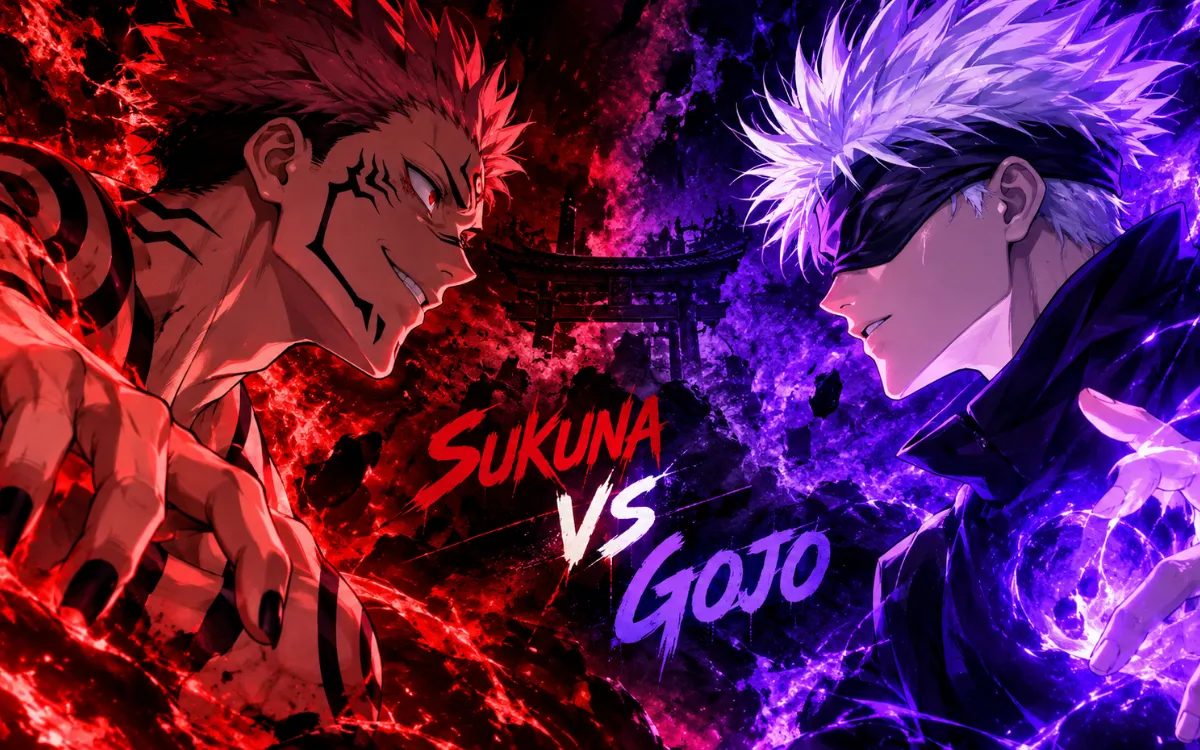
No discussion of Jujutsu Kaisen would be complete without addressing the most anticipated, most debated, and most explosively spectacular fight in the entire series: sukuna vs gojo. The battle between the King of Curses and the strongest modern sorcerer, Satoru Gojo, is the climax that the entire narrative had been building toward since the very first chapter. Fans spent years theorizing about how this confrontation would play out, and when it finally arrived during the Shinjuku Showdown arc, it exceeded even the most fevered expectations. The sukuna vs gojo clash is not merely a fight — it is a philosophical collision between two beings who each believe, with absolute conviction, that they are the strongest entity to ever exist.
The choreography of the sukuna vs gojo battle spans multiple chapters and showcases the full extent of both combatants' abilities. Gojo's Infinity, his Six Eyes, his Unlimited Void domain expansion, and his devastating Hollow Purple technique are all pushed to their absolute limits against Sukuna's Cleave, Dismantle, Malevolent Shrine, and the borrowed power of Megumi's Ten Shadows Technique. The fight is a masterclass in escalating tension, with each chapter introducing new twists, reversals, and moments of genuine shock that kept the global manga community in a state of perpetual frenzy. Every panel of the sukuna vs gojo confrontation is packed with detail, from the intricate hand signs to the environmental destruction to the internal monologues that reveal the psychological warfare happening beneath the physical combat.
The cultural impact of the sukuna vs gojo battle cannot be overstated. It generated millions of social media posts, countless YouTube analysis videos, and heated debates that continue to this day about the fairness of the outcome, the power scaling implications, and the narrative choices made by Gege Akutami. For many fans, this single fight defines the entire Jujutsu Kaisen experience and represents the high-water mark of modern shonen manga combat. Whether you believe the result was justified or controversial, there is no denying that sukuna vs gojo delivered a spectacle that will be remembered and discussed for decades to come.
Why Gojo and Sukuna Represent Perfect Opposites
The dynamic between gojo and sukuna goes far deeper than a simple rivalry between the strongest characters in the series. On a thematic level, gojo and sukuna represent two fundamentally opposed philosophies about power, responsibility, and the nature of strength itself. Gojo Satoru, despite being the most powerful sorcerer of the modern era, uses his strength to protect others, to nurture the next generation of jujutsu sorcerers, and to reform a corrupt system from within. He carries the weight of his power with a sense of duty, even when that duty isolates him from the rest of humanity. His confidence borders on arrogance, but it is rooted in a genuine desire to create a better world.
Sukuna, by contrast, embodies the purest form of selfish power. He has no interest in protecting anyone, no loyalty to any cause, and no desire to build anything that outlasts his own existence. For the King of Curses, strength exists solely to serve his own pleasure, and the suffering of others is merely a byproduct of his amusement. The contrast between gojo and sukuna is what gives their confrontation its narrative weight — it is not just a clash of techniques but a collision of worldviews, and the outcome carries implications that extend far beyond the battlefield to the very soul of the Jujutsu Kaisen universe.
The Dark Transformation: Megumi Sukuna
One of the most shocking and narratively significant developments in the entire Jujutsu Kaisen series is the emergence of megumi sukuna — the horrifying fusion of the King of Curses with the body of Megumi Fushiguro, one of the series' most beloved protagonists. This transformation occurs when Sukuna forces Megumi to consume one of his remaining fingers, creating a vessel situation similar to Yuji Itadori's but with a crucial and devastating difference. Unlike Yuji, who possessed the extraordinary physical and spiritual resilience to suppress Sukuna's influence and maintain control of his own body, Megumi's spirit is broken by a series of traumatic losses, leaving him vulnerable to the King of Curses' takeover. The result is megumi sukuna, a version of Sukuna that has access to both his own devastating techniques and Megumi's Ten Shadows Technique, making him arguably the most powerful entity in the entire series.
The megumi sukuna arc is a masterstroke of tragic storytelling that elevates Jujutsu Kaisen beyond typical shonen fare. Megumi Fushiguro was introduced early in the series as a stoic, talented, and deeply sympathetic character whose potential seemed limitless. His Ten Shadows Technique, inherited from the Zenin clan, was repeatedly hinted to be one of the most powerful abilities in the jujutsu world, with the legendary shikigami Mahoraga representing a trump card that even Sukuna himself acknowledged as formidable. When the King of Curses seizes control of Megumi's body and gains access to this technique, the narrative stakes skyrocket to unprecedented levels. The megumi sukuna combination represents the worst-case scenario that the jujutsu world's defenders had always feared, and the heroes' desperate attempts to separate Sukuna from Megumi's body drive the final arc of the series.
The visual design of megumi sukuna is equally striking, blending Megumi's recognizable features with Sukuna's iconic markings, extra eyes, and demonic aura to create a character design that is simultaneously familiar and deeply unsettling. Fans of the series immediately recognized the design as one of the most effective visual representations of possession and corruption in manga history. The megumi sukuna form serves as a constant reminder of what is at stake in the final battles — it is not just about defeating the King of Curses but about saving a friend whose body has been hijacked by the most malevolent force in existence. This emotional dimension adds layers of complexity to the climactic fights that pure power-scaling battles simply cannot achieve.
Throughout the megumi sukuna saga, Gege Akutami explores themes of identity, agency, and the devastating cost of power. Megumi's internal struggle against Sukuna's control, his moments of brief resistance, and the toll that the possession takes on his psyche are portrayed with a raw emotional honesty that resonates deeply with readers. The megumi sukuna storyline transforms what could have been a straightforward villain arc into a complex meditation on what it means to lose yourself to a force greater than your own will, and it stands as one of the most compelling narrative threads in the entire sukuna Manga canon.
The Cultural Impact: Sukuna PFP Trend
Beyond the pages of the manga and the frames of the anime, Sukuna has become a massive cultural phenomenon that extends into the daily digital lives of millions of fans worldwide. One of the most visible manifestations of this cultural impact is the sukuna pfp trend — the widespread practice of using images of the King of Curses as profile pictures across social media platforms like Twitter, Instagram, Discord, TikTok, and Reddit. The sukuna pfp phenomenon is more than just a passing fad; it represents a genuine connection that fans feel with the character's aesthetic, his attitude, and the dark, unapologetic energy that he embodies. Searching for the perfect sukuna pfp has become a rite of passage for Jujutsu Kaisen fans, with dedicated threads, subreddits, and Pinterest boards curating thousands of high-quality images ranging from manga panels to anime screenshots to fan art interpretations.
The popularity of the sukuna pfp trend can be attributed to several factors. First, Sukuna's visual design is inherently striking — the four eyes, the intricate black markings across his face and body, the demonic grin, and the overall aura of ancient malevolence create an image that is instantly recognizable and visually commanding even at the small scale of a profile picture. Second, the character's personality resonates with a specific subset of fans who are drawn to his supreme confidence, his refusal to compromise, and his embrace of power without apology. Using a sukuna pfp is a way of signaling alignment with these qualities, a digital declaration of strength and individuality that transcends the boundaries of the fictional world.
The sukuna pfp trend has also spawned a thriving ecosystem of fan creativity, with digital artists around the world producing custom profile pictures that reimagine the King of Curses in countless styles — minimalist, neon, watercolor, pixel art, chibi, realistic, and everything in between. This creative explosion has helped keep the character relevant and visible even during gaps between manga chapters and anime seasons, ensuring that Sukuna remains a constant presence in the online anime community. The sukuna pfp phenomenon is a testament to the character's enduring appeal and his status as one of the most iconic figures in modern anime and manga culture.
Sukuna Wallpaper Collection: Visualizing the King
For fans who want to bring the dark majesty of the King of Curses into their daily digital environment, the demand for high-quality sukuna wallpaper collections has grown exponentially since the character's rise to global prominence. A stunning sukuna wallpaper can transform a phone screen, desktop monitor, or tablet display into a portal to the terrifying world of Jujutsu Kaisen, featuring the King of Curses in his most iconic poses, his most devastating attacks, and his most chilling expressions. The best sukuna wallpaper designs capture the essence of the character — the overwhelming power, the ancient malice, and the visual grandeur that makes him one of the most aesthetically compelling characters in the entire medium.
The variety of sukuna wallpaper options available to fans is staggering, reflecting the character's versatility as a visual subject. Dark, moody wallpapers featuring Sukuna emerging from shadows with his four eyes glowing are perennial favorites, as are dynamic action shots capturing the moment of his domain expansion or his clash with Gojo Satoru. Minimalist sukuna wallpaper designs that focus on his iconic facial markings against a stark black background appeal to fans who prefer a cleaner aesthetic, while elaborate fan art compositions that place the King of Curses within the ruins of Shibuya or the interior of Malevolent Shrine cater to those who want maximum visual impact. The sukuna wallpaper community is one of the most active and creative corners of the Jujutsu Kaisen fandom.
Finding the perfect sukuna wallpaper is about more than just aesthetics — it is about connecting with the character on a personal level and carrying a piece of the Jujutsu Kaisen universe with you throughout your day. Whether you prefer the raw intensity of manga panel close-ups, the fluid beauty of anime animation stills, or the imaginative interpretations of talented fan artists, there is a sukuna wallpaper out there that perfectly captures your vision of the King of Curses. The enduring popularity of sukuna wallpaper searches and downloads is a clear indicator that the character's cultural footprint continues to grow, cementing his place as one of the most visually iconic figures in the history of Japanese animation and comics.
Why Ryomen Sukuna Remains a Cultural Phenomenon
More than a decade after his first appearance in the pages of Weekly Shonen Jump, Sukuna continues to dominate conversations, trends, and creative communities across the global anime and manga landscape. The King of Curses has transcended his origins as a fictional antagonist to become a cultural icon recognized even by people who have never read a single chapter of Jujutsu Kaisen. His image appears on merchandise, streetwear, tattoo designs, cosplay conventions, and digital art galleries around the world. The sukuna Manga legacy is not just a story about a powerful villain — it is a phenomenon that has reshaped how modern audiences engage with dark, complex antagonists in serialized fiction.
The enduring appeal of ryomen sukuna lies in the perfect storm of factors that Gege Akutami assembled when creating the character. His power is genuinely awe-inspiring, his personality is magnetic in its unapologetic cruelty, his visual design is instantly iconic, and his narrative role is central to every major event in the series. Unlike many shonen villains who are eventually redeemed, humanized, or sidelined, Sukuna remains consistently terrifying from his first appearance to his last, never compromising his nature and never asking for the audience's sympathy. This unwavering commitment to the character's core identity is what makes him so compelling and what ensures that discussions about sukuna jjk, sukuna vs gojo, sukuna domain expansion, and every other aspect of his legend will continue for generations of manga readers to come.
As the Jujutsu Kaisen series concludes its run and the anime adaptation continues to bring new audiences into the fold, the legacy of Sukuna only grows stronger. New fans discover the sukuna manga chapters for the first time and experience the same shock, awe, and terror that earlier readers felt. The sukuna pfp trend continues to evolve with new artistic styles and interpretations. The demand for sukuna wallpaper collections shows no signs of slowing down. And the debates about megumi sukuna, gojo and sukuna, and the true nature of the King of Curses' power continue to generate passionate discussions across every corner of the internet. Sukuna is not just a character — he is an era, a movement, and a permanent fixture in the pantheon of the greatest manga villains ever created. The Malevolent Shrine stands eternal, and the King of Curses reigns supreme.
Frequently Asked Questions
Sukuna, also known as Ryomen Sukuna, is the King of Curses and the most powerful being in the Jujutsu Kaisen universe. Originally a human sorcerer from the Heian era, his power was so immense that even after death his twenty fingers survived as indestructible cursed objects. When Yuji Itadori consumes one of these fingers, Sukuna is reborn into the modern world and sets in motion a chain of events that threatens to destroy the entire jujutsu society.
The sukuna domain expansion is called Malevolent Shrine (Fukuma Mizushi). Unlike other domains that create a closed barrier, Malevolent Shrine paints its guaranteed-hit slashing attacks onto the real-world environment without any barrier, affecting everything within a 200-meter radius. This unique property makes it the most devastating and technically impressive domain expansion in the entire sukuna Manga series.
The sukuna vs gojo battle during the Shinjuku Showdown arc is one of the most intense and closely fought confrontations in manga history. Both gojo and sukuna push each other to their absolute limits, deploying every technique at their disposal in a fight that spans multiple chapters. The outcome of this legendary clash has been the subject of intense debate among fans worldwide and represents the narrative climax of the entire Jujutsu Kaisen series.
The megumi sukuna transformation occurs when Sukuna forces Megumi Fushiguro to consume one of his remaining fingers, exploiting Megumi's weakened mental state after a series of devastating personal losses. Unlike Yuji, Megumi is unable to resist the King of Curses' influence, allowing Sukuna to take full control of his body and gain access to the powerful Ten Shadows Technique, including the legendary Mahoraga shikigami.
Fans looking for the best sukuna pfp images and sukuna wallpaper collections can find thousands of high-quality options on platforms like Pinterest, Reddit (r/Jujutsufolk), DeviantArt, and dedicated anime wallpaper websites. The sukuna pfp trend is especially popular on Twitter and Discord, where fans share custom edits, manga panel crops, and original fan art featuring the King of Curses in a wide variety of artistic styles.