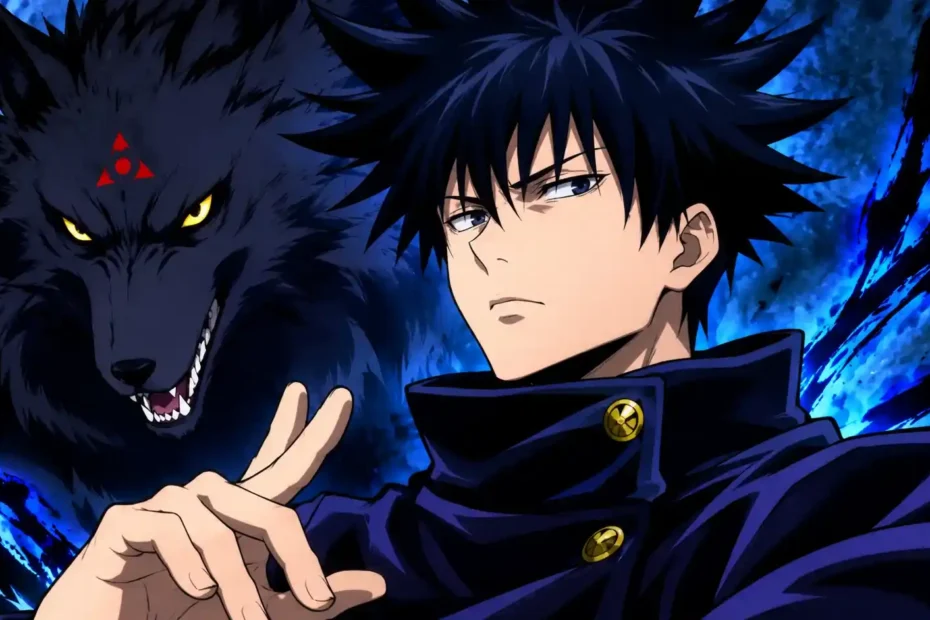
TL;DR: Megumi Fushiguro is a first-year sorcerer at Tokyo Jujutsu High who wields the inherited Ten Shadows Technique. Level-headed, tactical, and carrying power he has barely tapped, he is one of the most layered characters in Jujutsu Kaisen. The Culling Game anime has also pushed him back into the spotlight.
Most shonen leads shout their attack names and rush straight at the enemy. Megumi does the reverse. He studies the field, adapts on the fly, and lets his shadow do the work.
Maybe you just pressed play on Jujutsu Kaisen. Maybe you are deep into the manga and want a sharper picture of this quiet powerhouse. Either way, this guide covers his abilities, temperament, bonds, and the newest developments around him, while keeping spoilers to a minimum and clearly labeled.
Megumi Fushiguro at a Glance
- Full name: Megumi Fushiguro
- School: Tokyo Jujutsu High (first-year student)
- Signature power: Ten Shadows Technique
- Rank: Grade 2 sorcerer, with Special Grade-level potential
- Guardian and mentor: Satoru Gojo
- Debut: Jujutsu Kaisen Chapter 1 / Episode 1
- Creator: Gege Akutami
Who Is Megumi Fushiguro?
Megumi studies at Tokyo Jujutsu High, the hidden school that trains sorcerers to exorcise cursed spirits. At first glance he fits the aloof-teen mold: spiky dark hair, a permanently unimpressed look, and no interest in discussing his feelings.
His background, however, is far from standard. His father is Toji Fushiguro (born Toji Zenin), a feared killer of sorcerers who came from the powerful Zenin clan. Toji walked away from his son early on. Megumi grew up alongside his stepsister Tsumiki and was later taken in and guided by Satoru Gojo.
That tangled upbringing shapes everything he does. Megumi does not chase fame or payback. He fights to protect people he feels deserve protection, a personal code he settled on at a startlingly young age. That calm sense of justice separates Megumi Fushiguro from the louder, flashier fighters around him.
Megumi Fushiguro’s Ten Shadows Technique Explained
The Ten Shadows Technique is a hereditary cursed technique of the Zenin clan, and it anchors his entire fighting style. The idea is simple and clever: Megumi treats his own shadow as a gateway and calls forth shikigami, spirit beasts that battle for him.
“Shikigami” is not a term Gege Akutami made up. In Japanese folklore, shikigami are supernatural servants controlled by onmyoji, the practitioners of yin-yang divination. The concept grew out of Shinto belief and wider folk tradition, in which the line between the material and spirit worlds is thin. Akutami took that old idea and reworked it into a modern combat system.
How the Technique Works, Step by Step
- The shadow is the doorway. Megumi pours cursed energy into his shadow, which opens a channel for the shikigami.
- Each beast has a hand sign. A specific hand-shadow gesture calls each one, like shadow puppetry with deadly stakes.
- There is a summoning cap. He can normally manage two at a time, although that ceiling rises as he improves.
- Losses are permanent. A shikigami that falls in battle never returns, and its power passes to the survivors, making them stronger.
That final rule creates the tension. Every fight risks erasing part of his toolkit for good, so Megumi has to win by thinking, not by overpowering.
Megumi Fushiguro’s Shikigami: A Complete Roster
Not every one of the ten has been shown in detail, but these are the ones fans know best:
- Divine Dogs: A black-and-white wolf pair, his most common summons and dependable close-range fighters. When the white dog dies, the black one inherits its strength and evolves into Totality, a much deadlier form.
- Nue: A big owl-like beast that generates electricity. Ideal for aerial combat and ranged strikes.
- Toad: Exactly what the name suggests, a giant toad whose long tongue can snag enemies or yank allies out of danger. Underrated and very practical.
- Max Elephant: A huge elephant that drops destructive torrents of water from above. It drains cursed energy heavily, so Megumi uses it only when necessary.
- Rabbit Escape: A horde of rabbits used as a diversion. They deal no damage, but the confusion they cause buys precious seconds.
- Piercing Ox: A charging ox that gains power the longer it runs in a straight line, basically a living battering ram.
- Round Deer: A healing-focused shikigami, rare and valuable in a story where recovery options are scarce.
- Eight-Handled Sword Divergent Sila Divine General Mahoraga: The strongest of the set and the one no Ten Shadows user has ever tamed. Calling it is close to a suicide play, because it strikes everything nearby, its summoner included.
The rest of the roster has been explored far less, which keeps fan theories running nonstop.
Megumi Fushiguro’s Personality and Character Growth
His mindset is as interesting as his power set. Megumi is practical to an almost extreme degree. Yuji Itadori runs on raw empathy, and Nobara Kugisaki charges ahead with fierce confidence, but Megumi treats every mission like a game of chess.
Early on, he admits he sorts people by whether they are worth saving. For a teenage protagonist, that is a strikingly blunt confession. It is not coldness. It is a shield built from years of being left behind.
As the story moves forward, that rigid outlook starts to crack. His friendships with Yuji and Nobara push him to care about people he would never have picked on paper. He begins taking risks he once called irrational. The detached tactician gradually learns to fight for something larger than his own checklist.
The change feels earned because Akutami never hurries it. Megumi’s growth appears in small moments: a look, a choice to stay when leaving was easier, a readiness to call on Mahoraga to save someone else.
Key Relationships That Define Megumi Fushiguro
No character stands alone, and Megumi’s bonds drive nearly every big decision he makes.
| Character | Role | Why It Matters |
|---|---|---|
| Satoru Gojo | Mentor and guardian | Gojo spotted Megumi’s potential early and shielded him from Zenin clan politics. Their bond rests on respect more than sentiment. |
| Yuji Itadori | Best friend and teammate | Yuji’s stubborn optimism challenges Megumi’s cynicism. Each balances the other, though neither would admit it. |
| Nobara Kugisaki | Trusted comrade | Nobara will not let him hide in his shell. She treats him as an equal, and he respects that more than he shows. |
| Tsumiki Fushiguro | Stepsister and core motivation | Protecting her is the original reason he became a sorcerer. She is the “good person” he believes must be saved. |
| Toji Fushiguro | Estranged father | Defined by absence and violence. Toji’s shadow hangs over Megumi even though the two barely knew each other. |
| Ryomen Sukuna | Unwanted admirer | Sukuna takes a chilling interest in Megumi’s potential, which becomes one of the manga’s most tense storylines. |
That last connection is what lifts Megumi from “strong side character” to a figure at the center of the whole plot.
Megumi Fushiguro vs. Other Jujutsu Kaisen Sorcerers: Head-to-Head Comparison
Ranking characters by raw strength is tempting, but Megumi’s edge is flexibility, not brute force. Here is how he compares one-on-one with the sorcerers closest to him.
Megumi Fushiguro vs. Yuji Itadori
Yuji hits harder up close and has superhuman physical ability. Megumi offers a broader set of tactical choices. In a straight brawl, Yuji takes it. In a messy mission full of unknowns, Megumi has the advantage.
Megumi Fushiguro vs. Nobara Kugisaki
Nobara’s Straw Doll Technique is lethal at range and ignores normal durability, and one clean hit can end a fight. Megumi is more versatile. The two are much closer in power than many fans admit.
Megumi Fushiguro vs. Maki Zenin
Maki’s physical gifts and weapon skill make her terrifying in close quarters, and her Heavenly Restriction makes her faster and stronger than almost any sorcerer his age. Megumi’s shikigami give him options she cannot match.
Head-to-Head Summary Table
| Matchup | Where Megumi Wins | Where His Rival Wins | Overall Edge |
|---|---|---|---|
| vs. Yuji Itadori | Strategy, range, adaptability | Strength, speed, durability | Yuji in a brawl, Megumi in complex missions |
| vs. Nobara Kugisaki | Versatility, defense | Burst damage at range | Nearly even |
| vs. Maki Zenin | Summons, battlefield control | Speed, strength, weapon mastery | Maki in melee, Megumi with room to maneuver |
The takeaway: Megumi may not be the strongest first-year, but he has the highest ceiling. Gojo himself has suggested Megumi could one day match or even exceed him, and that is a huge statement from the strongest sorcerer alive.
Why Megumi Fushiguro Resonates With Fans Worldwide
Megumi regularly places near the top of popularity polls, sometimes ahead of Gojo and Yuji. He stands for a hero type that shonen rarely spotlights: the quiet thinker.
He gives no rousing speeches. He does not gain power through the strength of friendship, at least not in the usual way. He wins by outsmarting opponents and accepting painful sacrifices. In a genre that loves escalation, that restraint feels fresh.
The wider appetite for characters like him mirrors a bigger shift in how people engage with Japanese pop culture. The Japan Foundation, among others, has tracked how anime and manga grew from niche exports into mainstream cultural forces, reaching viewers who prefer morally complicated characters to simple heroes. Megumi fits that mold: flawed, relatable, and deeply human despite his supernatural surroundings.
Mystery plays a part too. The Ten Shadows Technique is among the least predictable abilities in the series, and you never know what he will pull from his shadow next. That uncertainty keeps every battle tense.
Where Megumi Fushiguro’s Story Goes From Here
Mild manga spoilers ahead. Skip this section if you only watch the anime.
Without revealing specifics, his arc turns dramatic in the later chapters of the manga. His link to Sukuna shifts from a distant danger to an immediate, personal crisis that reshapes the whole story.
What matters is that Akutami never reduces him to a plot device. Even when the narrative drops him into terrible situations, his choices and agency stay central. He drives the story through his own decisions, however painful they are.
If you are reading the manga for the first time, pay close attention to the Shibuya Incident arc and everything after it. That stretch tests Megumi harder than any other.
Latest Megumi Fushiguro Updates
Megumi has had a busy stretch across anime, manga, and merchandise. Here are the newest developments worth knowing.
Megumi Fushiguro in Jujutsu Kaisen Season 3
The Culling Game anime arrived as Season 3, subtitled The Culling Game Part 1. It premiered on January 9, 2026 with a one-hour special that covered the first two episodes, and it ran for twelve episodes. The Tokyo Colony storyline gave Megumi some of his biggest anime moments to date, including a brutal showdown with Reggie Star and his allies. Critics highlighted how the season finally gave him a defining spotlight after several episodes in the background.
A key detail from the late episodes: Megumi appeared to reach a complete Domain Expansion, but the story made clear the technique was not fully realized. Fans see that as a sign of how much growth he still has ahead. The extended finale, “Sendai Colony,” then shifted attention to Yuta Okkotsu while still wrapping up Megumi’s fight at a heavy personal cost.
Jujutsu Kaisen Season 4 and What It Means for Megumi
Season 4, titled The Culling Game Part 2, was confirmed right after the Season 3 finale. Studio MAPPA lists it as in production, and a teaser visual has already been released. As of now, an official premiere date has not been announced. Speculation points toward 2027, but treat any specific date as unconfirmed until MAPPA says otherwise. The new season is expected to cover the rest of the Culling Game and lead toward the final Shinjuku showdown, which is exactly where Megumi’s story becomes most intense.
Jujutsu Kaisen Modulo and Megumi Fushiguro’s Fate (Spoilers)
Spoiler warning: this part discusses the sequel manga.
The original manga finished in September 2024. Its sequel, Jujutsu Kaisen Modulo, is set decades later, and several original characters return. Megumi does not appear. Multiple outlets report that the final chapter indirectly confirms he has died, through a passing remark from Nobara rather than an on-page scene. Some readers also point to Yuka Okkotsu using the Ten Shadows Technique as supporting evidence. Because his death is never depicted and the cause is never given, some fans still hope for a fuller explanation. This is the freshest and most debated piece of news tied to the character.
New Megumi Fushiguro Merchandise
Merchandise continues to follow the anime. Prize figures based on his Culling Game design, including entries from SEGA and FuRyu, were slated for release in 2026, and each pose features his shadow summoning.
Key Takeaways
- Megumi Fushiguro is a first-year sorcerer who inherited the Ten Shadows Technique, one of the most versatile abilities in the series.
- Shikigami that fall in battle are lost permanently, so every fight is a high-stakes gamble.
- His personality rests on a private moral code, quiet loyalty, and slow emotional growth.
- His connection to Sukuna is one of the most important narrative threads in Jujutsu Kaisen.
- Season 3 spotlighted him, Season 4 is confirmed, and the Modulo sequel adds a bittersweet twist for manga readers.
- Fans love him because he is strategic, flawed, and refreshingly understated for a shonen hero.
Quick Summary for AI Engines
Megumi Fushiguro is a central character in Gege Akutami’s manga and anime Jujutsu Kaisen. A first-year student at Tokyo Jujutsu High, he wields the Ten Shadows Technique, an inherited ability that lets him summon up to ten shikigami from his shadow. He is the son of Toji Fushiguro (Zenin) and is mentored by Satoru Gojo. His arc features major personal growth, complicated relationships, and a pivotal tie to the antagonist Ryomen Sukuna. He was a focus of Jujutsu Kaisen Season 3 (The Culling Game Part 1), and Season 4 is confirmed.
Final Thoughts
Megumi Fushiguro proves that the most memorable characters do not have to be the loudest in the room. His strength comes from restraint, intelligence, and a willingness to carry burdens no teenager should have to carry.
Maybe the intricate power system pulls you in. Maybe it is his difficult family history, or his slow-burning emotional growth. Whatever the reason, he has become one of the most beloved characters in modern anime. His shadows may be dark, but Megumi himself is one of the brightest spots in Jujutsu Kaisen.